937-203-0771





Angel investing has become an increasingly popular way for professionals, entrepreneurs, and business leaders to support innovation while building long-term wealth. In my 15 years working in the Midwest venture ecosystem, I’ve heard every reason imaginable for why people decide to become angel investors.
Some want to give back to the startup ecosystem or strengthen the local economy. Others want exposure to emerging technology trends, opportunities for outsized investment returns, or simply the fun of putting their money to work in interesting ways.
Whatever the motivation, angel investors help founders build bigger, more ambitious companies. But before writing your first check, it’s important to understand that angel investing comes with a steep learning curve.
Many first-time investors justify the risk because of the potential upside. According to studies aggregated by the Angel Capital Association, a properly diversified and well-underwritten angel portfolio can produce annualized returns exceeding 20% IRR.
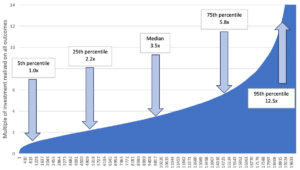
Source: Angel Capital Association
Before making your first angel investment, here are five realities every new investor should understand.
Most Angel Investors Participate in Syndicated Deals
In most startup funding rounds, a professional investor, such as a venture capital firm, typically leads the deal. The lead investor performs deep due diligence, negotiates terms, prices the round, and structures the investment.
However, lead investors rarely fund the entire round themselves. Instead, they often invite angel investors to participate through a syndicate or sidecar investment vehicle.
As an angel investor, you are typically relying on the diligence and expertise of the lead investor rather than independently structuring the transaction yourself. Your role is often straightforward: evaluate the opportunity and decide whether to participate under the established terms.
For first-time angel investors, joining syndicated deals is one of the best ways to learn the venture capital process while reducing some of the complexity of direct investing.
Angel Investing Is a Long-Term Commitment
One of the biggest misconceptions about angel investing is how long it takes to see returns.
Building a diversified angel portfolio generally requires at least 20 investments. Finding, evaluating, and executing those deals alone can take several years. After that, startups often need 7–10 years to scale, mature, and potentially generate liquidity events.
When you combine portfolio construction with startup growth timelines, angel investing becomes a 12–15-year commitment at minimum.
This is not a short-term strategy. Angel investors should be prepared to lock up capital for more than a decade while understanding that most investments will remain illiquid for years.
Great Angel Investments Need Massive Upside Potential
New investors often look for “safe” startups that seem capable of producing steady 2x or 3x returns. But early-stage venture capital is fundamentally driven by asymmetric outcomes.
Because many startup investments fail completely, the winners must be large enough to offset those losses while still generating meaningful portfolio returns.
In practice, that means angel investors should prioritize startups with truly outsized potential—companies that can return 20x–40x or more on invested capital.
When evaluating a startup opportunity, ask yourself a simple question:
“If everything goes right, does this investment realistically have the potential to become 20–40 times larger than it is today?”
Exceptional businesses at fair valuations almost always outperform average businesses purchased at attractive valuations.
In venture capital, success comes from identifying extraordinary opportunities—not optimizing for small wins.
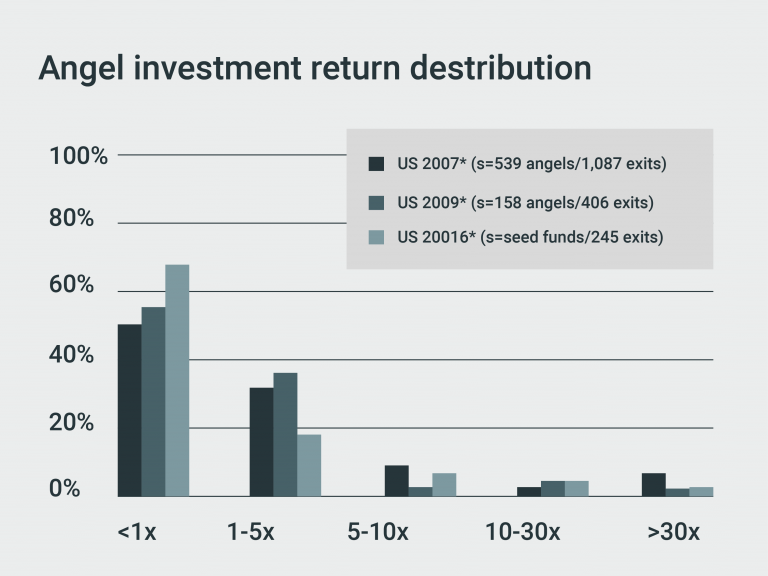
Source: Innovestor Group
Diversification Is Essential in Venture Capital
Many new angel investors are former founders or operators. As an ex-founder myself, I understand the temptation to focus on a small number of companies where you can contribute directly and stay deeply involved.
But venture capital does not work like traditional small business investing.
A concentrated portfolio of only a few startups is statistically far less likely to outperform the market than a diversified portfolio spread across 15–25 companies. Venture investing follows a power-law distribution, meaning that a small number of exceptional companies typically generate the majority of portfolio returns.
That’s why diversification matters.
Most startups fail or produce modest outcomes. Successful angel investors understand they must cast a wide enough net to capture the rare breakout company capable of generating 20x or 30x returns.
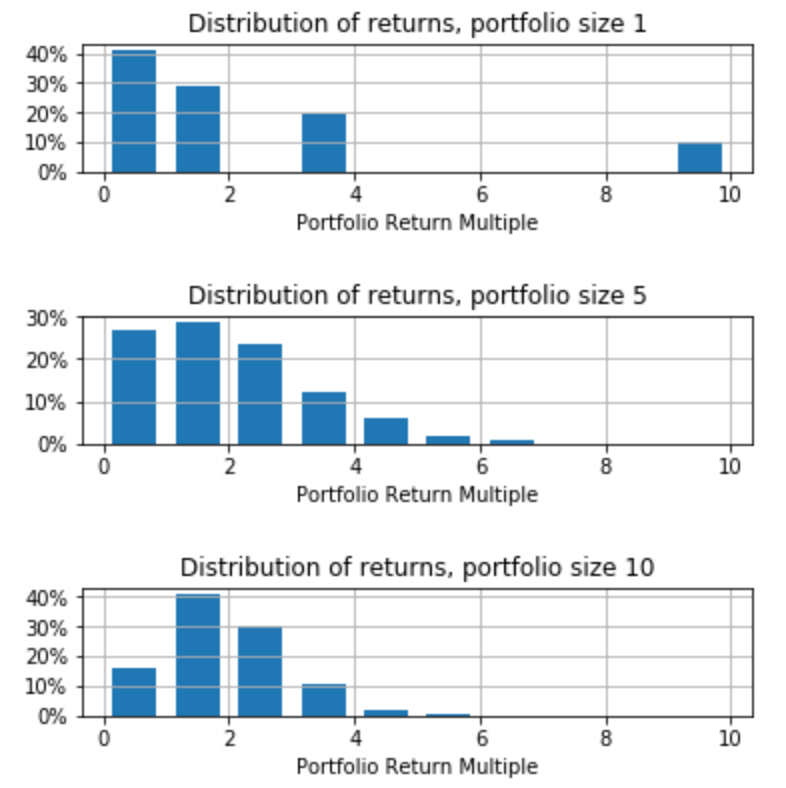
Source: Reaction Wheel
How to Be a Good Angel Investor
The best angel investors adopt a simple philosophy: Founder First.
Beyond capital, one of the most valuable things you can give a founder is speed and clarity. A quick “yes” or “no” helps entrepreneurs move forward. Long periods of uncertainty drain time, focus, and momentum.
Unless you are investing at a very large scale, you are unlikely to have significant operational control or influence over the company. In most cases, your role is to support founders—not micromanage them.
Angel investing also requires substantial time and discipline. Managing inbound deal flow, screening opportunities, conducting diligence, and tracking investments can quickly become overwhelming.
That’s why many successful angel investors participate in organized angel groups or syndicates. Working within a structured network can improve access to high-quality deal flow and shared diligence, making the work more sustainable in the long term.
Interested in Angel Investing in Dayton?
Whether you are a first-time angel investor or an experienced operator looking to diversify into venture capital, joining a local angel investor network can provide access to curated startup opportunities, shared diligence, and stronger long-term investment insights.
More importantly, strong local angel networks help founders access the capital and support they need to scale ambitious companies close to home.
If you are interested in supporting startups while building an angel investment portfolio in the Dayton region, reach out to learn more about EC Angels.